Top Ten Black Third Basemen Part One
The seventh article in a series where the top ten Black baseball players at each position will be ranked

Introduction
The “Top Ten Black Players” article series is a project that exists to celebrate Black Baseball’s all-time greats at every position. While various articles with the all-time rankings of baseball players are very common, pieces that solely rank the top Black baseball players of all time are sparse. This series includes Black baseball players from throughout the African diaspora and not just African-American players.
Unbeknownst to many, a large number of Afro-Caribbean and Afro-Latino players who appear on these lists have proclaimed their Blackness on record in interviews, autobiographies, and firsthand accounts. There are also countless instances of Black players confirming another player’s Blackness on record, such as when Luis Tiant III said that Juan Marichal and other Afro-Latinos were unfairly left out of the Black Aces fraternity.
The careers of those who played in the Negro Leagues, Latin America, and the Caribbean before the integration of MLB will be included. Black baseball players who have worn MLB uniforms will be featured as well. Because of the lack of statistical data for Negro Leagues players, firsthand and secondhand accounts will play a significant part in these rankings.
Surface level and advanced statistics will be present, so I hope those who strongly prefer one or the other are satisfied with my assessments. Some of these lists will include active players, and you may be surprised by some of my additions and omissions. I hope to spark debate and discussion of Black baseball players of the past and present with my writing, especially by baseball fans who are a part of the African diaspora.

The position player rankings will be much more difficult but rewarding and exciting, so I wanted to get those out of the way first. I will start with the catcher position and go in order based on each position's assigned number. There will be separate lists for Black starting pitchers and Black relievers, published last.
Top Ten Black Third Basemen Part One
Third base is by far the weakest position on the defensive spectrum when observing the collective Black talent of the group. This position group also boasts some of the most underrated position players to wear an MLB uniform during The Integration Era. In the Negro Leagues, third base was the position designated for the infielder who had the arm to play on the left side of the dirt but lacked the dexterity and/or range to adequately defend at a middle infield position. There were very few full-time third basemen in the Negro Leagues who could be considered stars.
This theme seemed to have carried over during the early decades of MLB’s Integration Era, as most Black players who have logged appearances at third base were stopgaps, utility players, or super-utility players. The ratio of full-time Black third basemen in MLB history is noticeably paltry compared to the number of full-time Black shortstops and second basemen. Although third base is treated as more of a premium position than second base in MLB, this idea was not common until the mid-1980s.
Honorable Mentions
Ke’Bryan Hayes
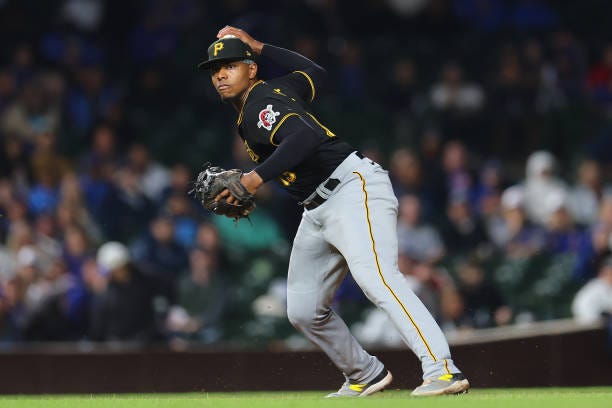
Pittsburgh Pirates third baseman Ke’Bryan Hayes is a second-generation MLB player. He is the son of longtime third baseman Charlie Hayes. He was drafted in the first round of the 2015 MLB Draft directly out of high school and has developed into one of the best defenders of his generation.
Charlie Hayes
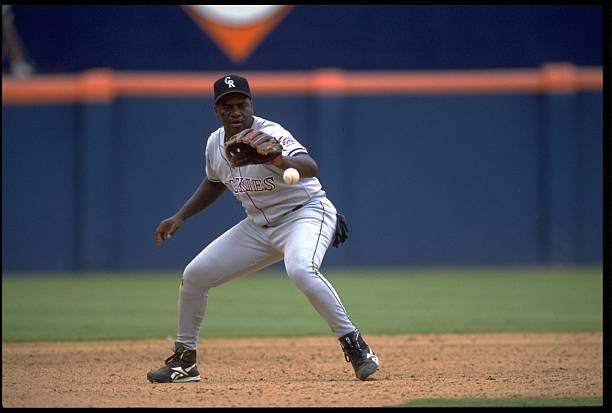
The father of Ke’Bryan Hayes, third baseman Charlie Hayes played for seven teams during his 14-year career. He was drafted directly out of high school in Missouri and was an average everyday third baseman upon reaching the majors. He was the starting third baseman on the New York Yankees team that won the 1996 World Series.
Joe Foy
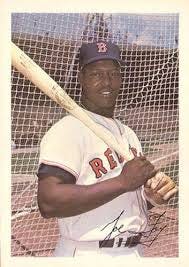
Joe Foy had an extremely successful minor-league career and was one of the first Black position players to play for the Boston Red Sox regularly. He showed flashes of potential throughout his six-year career with four different ballclubs but had his career end abruptly due to injuries and conduct issues.
Al Smith
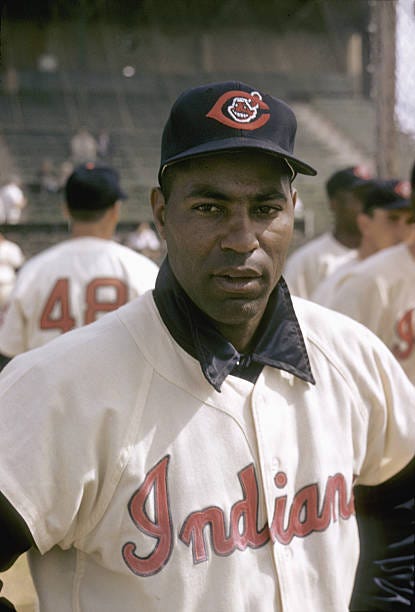
Three-time All-Star Al Smith’s professional baseball career started with the Cleveland Buckeyes of the Negro Leagues in the mid-1940s at 18 before he leaped to MLB in 1953 with the Cleveland Indians. He spent his prime years as the leadoff hitter for Cleveland during their successful mid-1950s run that included an appearance in the 1954 World Series.
Rafael Devers
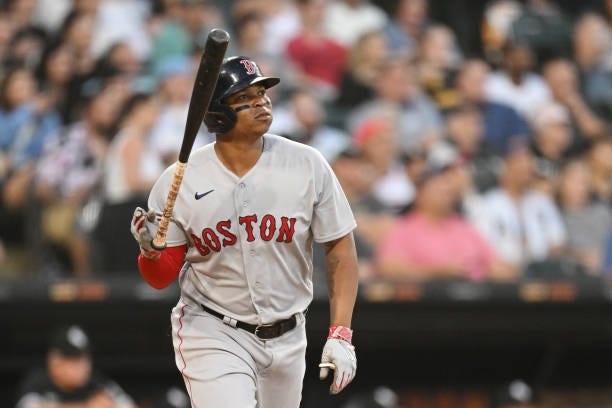
Born and raised in the Samaná province of the Dominican Republic, Samaná-American-Dominican Rafael Devers is the third baseman in this section on a clear trajectory to reach the top ten. He made his debut at age 20 for a Boston Red Sox team that was ready to compete in the playoffs and the next season he was the starting third baseman on the team that won the World Series. Devers is signed to a 10-year, $313 million dollar contract with Boston. He has three seasons with more than 30 home runs and another three with more than 20.
Enos Cabell
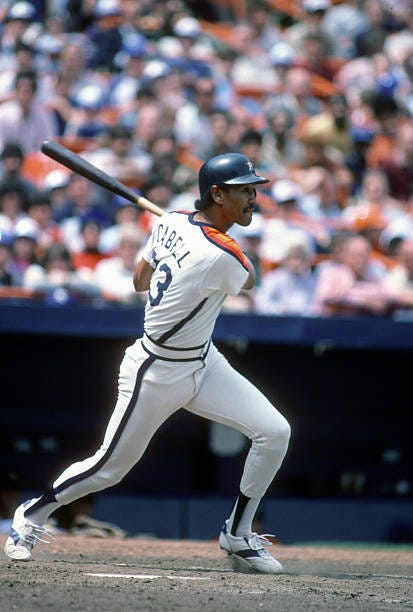
A longtime Houston Astro, Enos Cabell is one of MLB's greatest base-running third basemen. He posted four consecutive seasons with at least 30 stolen bases and logged seven seasons with five or more triples. He carved out a 15-year career with his ability to put the bat to the ball and his athleticism.
Miguel Sanó
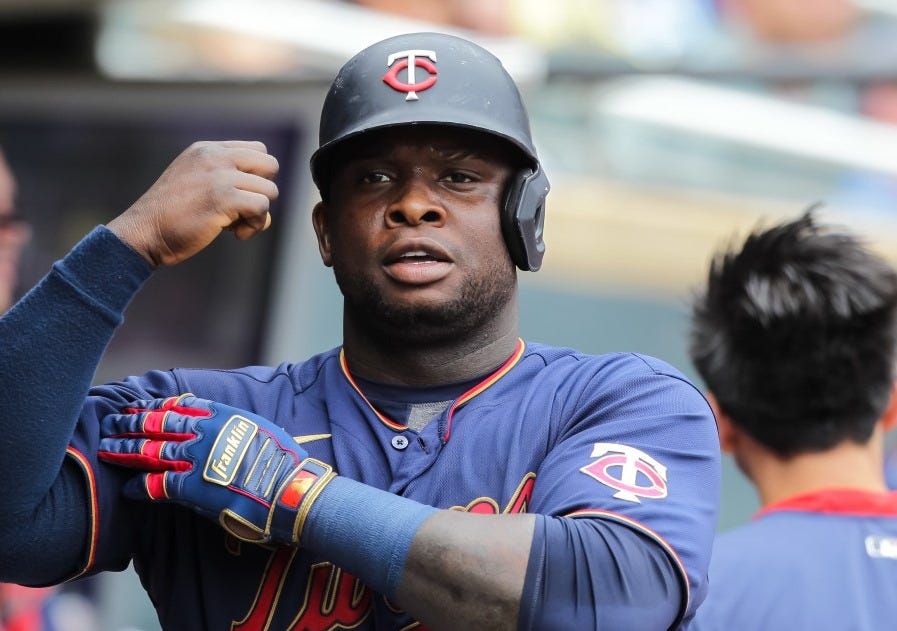
Haitian-Dominican Miguel Sanó never reached his vaunted potential but has shown plenty of flashes during his nine years in MLB. He’s struggled to stay healthy and in shape despite having the frame and athleticism of a prototypical NFL defensive lineman paired with a very strong throwing arm. He has four seasons with more than 25 home runs while only recording more than 130 games played in one of his nine MLB seasons.
T-10. Bobby Bonilla
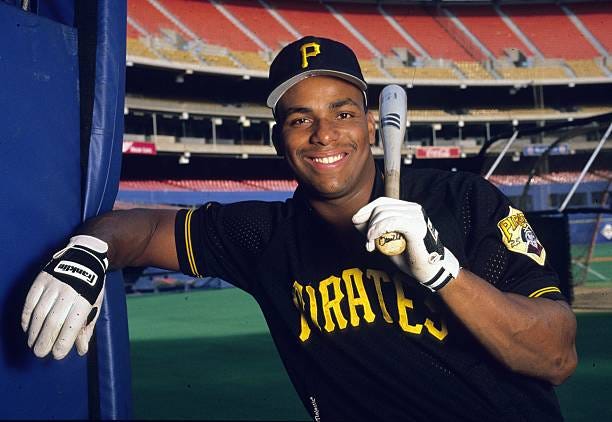
“Bobby Bonilla’s a total player and he's only going to get better. I said last year that I thought he'd eventually be one of the best in the National League. It's happened faster than I expected. He's still a big lovable guy, but he's also a tough son-of-a-bitch when he's got a bat in his hands." - Jim Leyland
Roberto “Bobby” Martin Antonio Bonilla is an Afro-Puerto Rican third baseman who grew up in the South Bronx section of New York City. He was selected to six All-Star teams and won three Silver Sluggers during his 16-year career. He was discovered through a network of scouts who watched him play in Canada for a team comprised of elite high school talent from all over the United States.
The tournament was coordinated and led by a longtime member of the Pirates scouting department named Syd Thrift who tipped off some of his former colleagues after bonding with Bonilla. After graduating from Herbert H. Lehman High School, he signed with the Pittsburgh Pirates as an amateur free agent in 1981 by Pirates farm system director Branch Rickey Jr.
Bonilla had a turbulent minor-league career. He struggled to find his footing during his first two years in the lower levels of MiLB but improved as he was promoted through the Pirates farm system. During Bonilla’s time in the minors, he formed a close relationship with Barry Bonds. He played in the Puerto Rican Winter League extensively during the early 1980s and Bonilla credits the PRWL for helping him sharpen his skills. After receiving an invite to major-league-level Spring Training camp in 1985, he broke his leg in an outfield collision while going for a flyball.
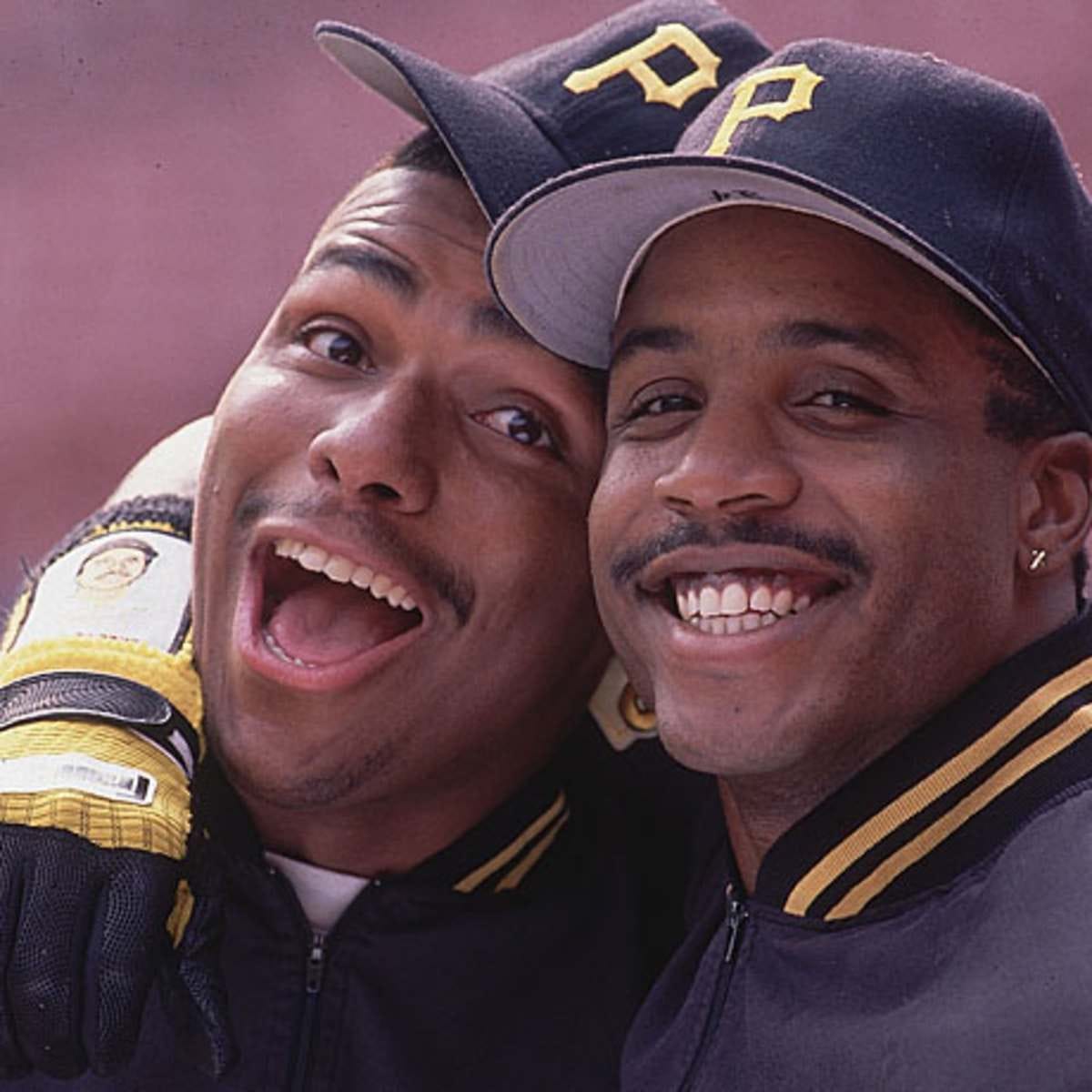
The injury was a major setback, but he made the sudden leap to MLB in 1986 after being selected by the Chicago White Sox in the 1986 Rule 5 Draft. He slashed .269/.361./355 with 10 doubles and two home runs across 75 games for Chicago before being traded back to Pittsburgh on the order of recently appointed Pirates GM Syd Thrift. Bonilla spent the next five seasons wearing black and gold in Pittsburgh, logging a .287/.358/.492 slash line and helping the ball club reach two consecutive NLCS in the early 90s. He also had two top-three NL MVP finishes and accrued three Silver Sluggers.
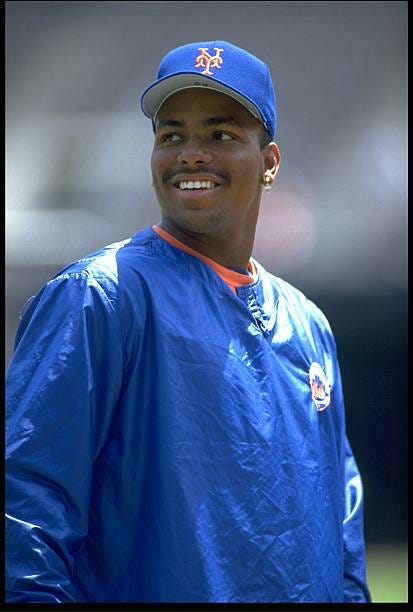
After reaching free agency in the 1991 season, he went back home and signed a five-year, five-million-dollar contract with the New York Mets that was the richest in MLB history at the time. He struggled with injuries in the first year of his contract and performed up to his standards for the next two years but frequent squabbles with the brutal media of New York sullied his perception within his hometown.
“I can handle New York because I don’t get my feelings hurt the way Bobby does. I don’t give a __ what people write about me or say. Bobby does. He’s too sensitive. I told him before he went there that he wasn’t going to be able to deal with it but he didn’t believe me. Now, he believes me.” - Barry Bonds
In 1995, Bonilla was traded to the Baltimore Orioles, where his playoff experience helped a ball club that was looking for a ring in an extremely competitive American League. The following season, he signed as a free agent with the Miami Marlins and helped them win the 1997 World Series against the Cleveland Indians. In May 1998, he was traded to the Dodgers before being traded back to the New York Mets later in the fall. After being released by the Mets, he played with the Atlanta Braves and St. Louis Cardinals before retiring. Bonilla possessed a .279/.358/.472 career slash line with 408 doubles and 287 home runs at the end of his career.
T-10. Hank Thompson
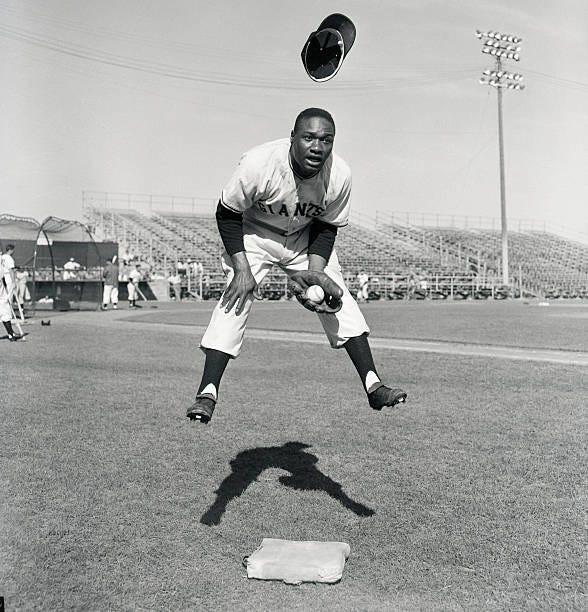
“Hank was a little bit off-center. He had a drinking problem and a woman problem. … But he was all baseball on the field.” - Stanley Glenn
Hank Thompson achieved a myriad of firsts for Black players during an impressive career that started at 17 years old in the Negro Leagues and ended abruptly when he was 30. He grew up in the state of Oklahoma, skipping school often during his childhood. He started playing baseball at a reform school after being arrested for truancy and underage drinking. After being released, he shagged fly balls and played for semipro baseball teams in Dallas, Texas before getting an opportunity to play for the Kansas City Monarchs at 17 years old.
Thompson slashed .315/.373/.415 during his rookie season in the Negro Leagues before being drafted into the Army to fight in World War II, missing the 1944 and 1945 Negro Leagues seasons. In 1946, he returned to appear in 24 games with the Monarchs before having his contract bought by MLB’s St. Louis Browns during the 1947 season.
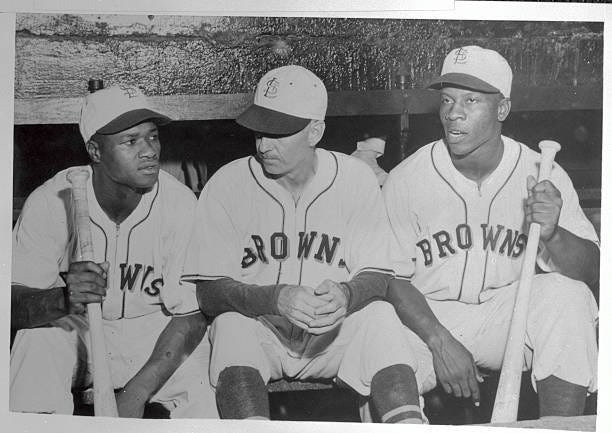
Thompson was the third Black player to break MLB’s color line after Jackie Robinson and Larry Doby, the first to play second base, the youngest Black player to integrate an MLB team, and the first Black player to appear in an MLB game at Yankee Stadium. For the 1948 season, he returned to the Negro Leagues to play for the Monarchs because of financial disputes with the St. Louis Browns front office.
Thompson quickly got another opportunity to play in MLB, joining the New York Giants in 1949. He made his debut with the club in July, becoming the first Black player to wear a Giants uniform and the only player in baseball history to break the color line for two MLB franchises. Two days later he became the first Black player to appear alongside a Black teammate, doing so with shortstop/outfielder Willard Brown. Later in his career, Thompson was a part of the first all-Black outfield trio with Hall of Famers Willie Mays and Monte Irvin.
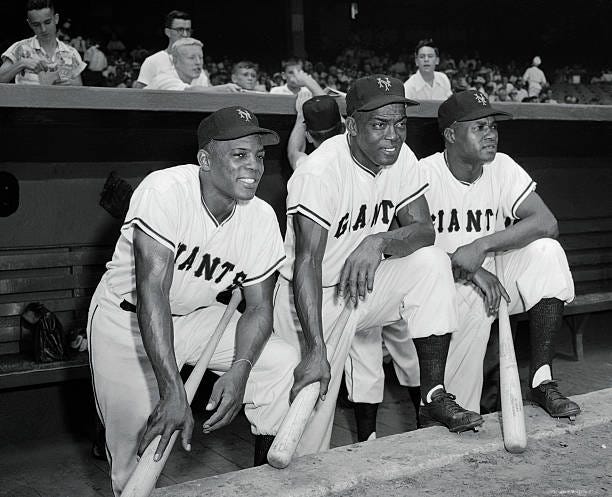
Thompson played for the New York Giants his entire MLB career as part of a formidable position player core that included Willie Mays, Monte Irvin, Alvin Dark, and others. He helped a 97-win Giants team win the 1954 World Series in a sweep over a Cleveland Indians team that is thought of as one of the best teams to lose a World Series.
Veteran Monte Irvin was one of the leaders in the Giants clubhouse, and he kept close watch over Thompson. He helped the third baseman manage his alcohol addiction and made sure he arrived at the ballpark on time. When Irvin left the Giants and went to the Chicago Cubs, Thompson immediately fell back into his habits of drinking and being a cancer in the clubhouse.
Some believed that one of the reasons why he consumed so much alcohol was to numb the pain he was constantly in. He suffered a concussion, a chipped kneecap, a major shoulder injury, and a myriad of lower leg injuries during his career. While the third baseman was consistently successful, he struggled to stay on the field due to reoccurring injuries and was forced to retire at the age of 30.
8. Terry Pendleton
[A glue guy] is a guy who’s unselfish and who’s a good teammate… A guy who communicates well and who’s honest with his teammates and himself. Somebody the other guys can count on to offer advice or encouragement. He keeps everybody loose, but at the same time, focused… It’s a guy who — in baseball clubhouses that often have age gaps, varying talent levels and even language barriers — just sort of keeps everything together. You know, like glue. — David Ross
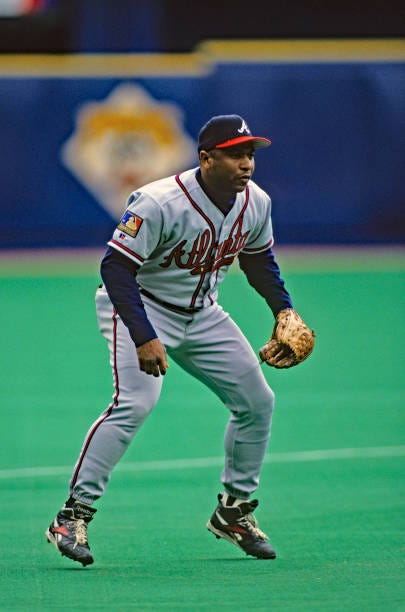
Switch-hitting third baseman Terry Pendleton put together an impressive 15-year career as a quintessential glue guy on some of the NL’s most dominant ball clubs during the 1980s and 1990s. He collected three Gold Gloves, was selected to one All-Star team, captured an NL batting title, and won the 1991 NL MVP Award. The veteran appeared in five World Series for the St. Louis Cardinals and Atlanta Braves but failed to win despite coming agonizingly close. He is one of just three players in MLB history to have appeared in at least five World Series without being on a winning team.
He grew up in Southern California, one of the most talented regions for high school baseball in the entire world. He was often overlooked when competing against his peers on South Central LA’s and Oxnard’s baseball fields. Pendleton did not get many offers to play college baseball and wound up at Oxnard College, where he turned enough heads to get an opportunity to transfer to a mid-sized college in the California State University system. The St. Louis Cardinals drafted him in the seventh round of the 1982 MLB Draft out of California State University, Fresno.
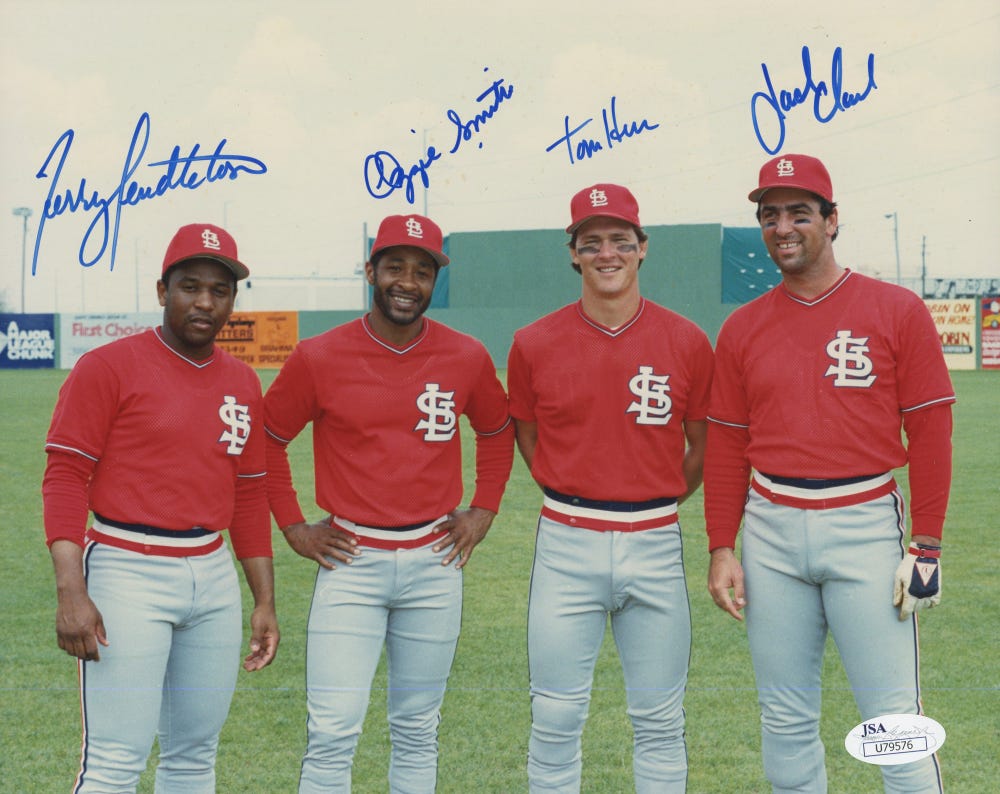
Pendleton quickly moved through the minors with his defensive prowess at the hot corner and above-average on-base skills. He made his MLB debut during the 1984 season for the Cardinals and established himself as the full-time third baseman, going .324/.357/.420 with 16 doubles and 20 stolen bases across 67 games during his rookie season. He formed one of the most potent defensive third base-shortstop combinations in baseball history alongside Hall of Famer Ozzie Smith Jr. They led St. Louis to two World Series berths in 1985 and 1987, losing both in seven games.
After seven subpar seasons with St. Louis, Pendleton was traded to the Atlanta Braves. During his tenure with Atlanta, the third baseman grew into the all-around player that the Cardinals brass hoped he would be. He led the NL in hits for two consecutive years. The Baseball Writers Association of America voted him first in NL MVP voting in 1991 and second in 1992.
He helped Atlanta make four NLCS and three World Series berths, lending the experience he accumulated during his two World Series runs with St. Louis to a talented Braves club that featured five Hall of Famers. Pendleton was such a key cog in the Braves clubhouse that they traded for him a year after letting him leave in free agency to join the Florida Marlins in 1995.
After playing for the Cincinnati Reds and Kansas City Royals in 1997 and 1998, Pendleton retired and became a long-time coach with the Braves. He was the hitting coach from 2002 to 2016, before moving to the bench coach role for 2017. From 2018 to the present day, he has been a traveling hitting instructor in the Braves minor league system.
7. Don Buford
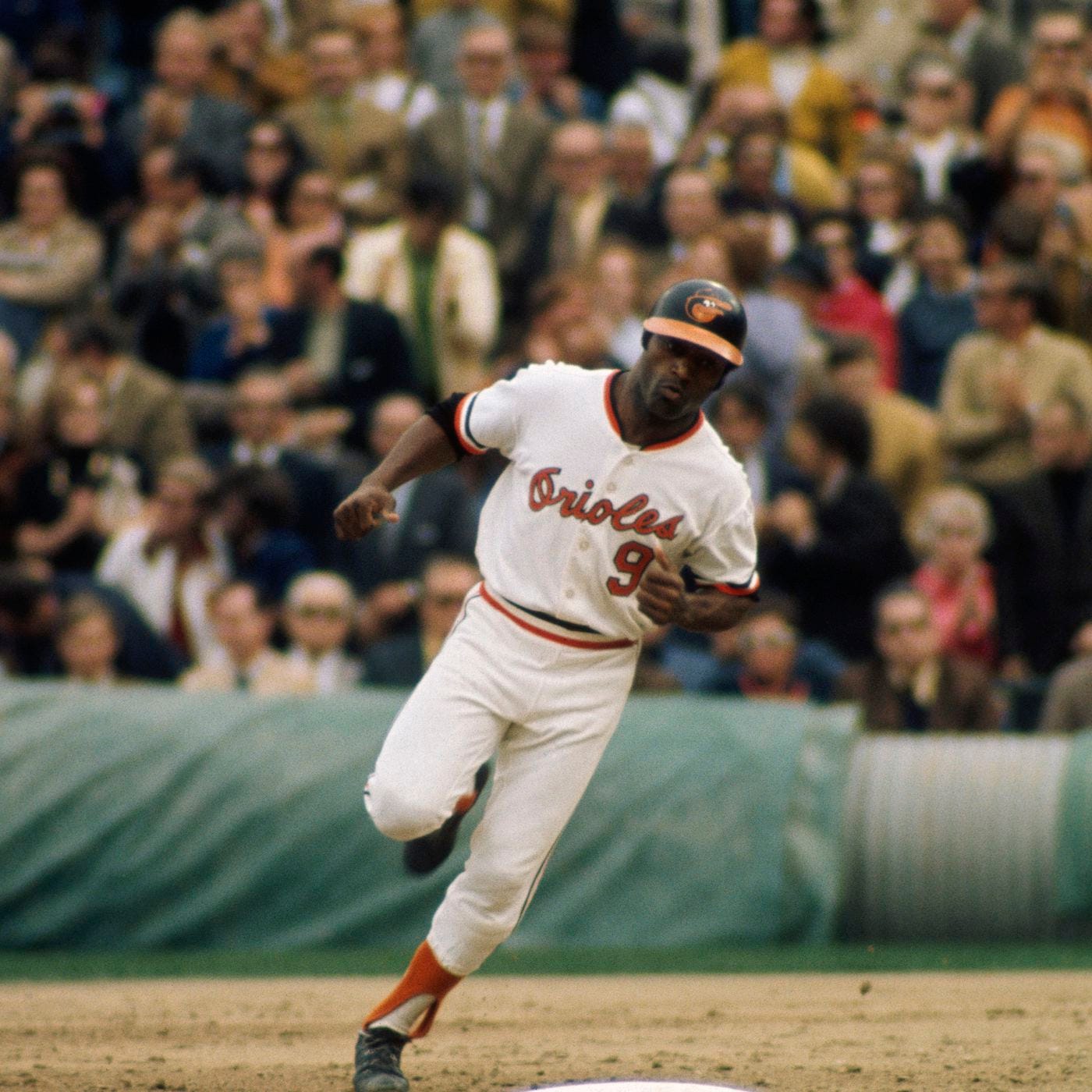
“Don Buford is the spark plug... the guy who always gets on base, who doesn’t scream or yell, but when you see him out there on a sack, you just have just got to bring him home.” - Frank Robinson
Don Buford is a player who was ahead of his time because he played in an era where pundits didn’t commonly celebrate defensive versatility and on-base skills. On the contrary, he was beloved by fans in the cities where he played and highly thought of in the clubhouses where he spent time with his teammates and managers/coaches. He was raised in the Western section of Texas, near Louisiana, before moving to California with his mother as a child. They settled in Los Angeles with family who had moved to the city earlier in The Great Migration after Don’s father was killed in a hunting accident.
In LA, he blossomed into one of the city’s most prolific two-sport stars of the 1950s. He dominated the Southern California football and baseball scenes at the high school and collegiate levels. He was one of USC’s earliest superstar student-athletes, receiving fanfare on a national level. He left USC in 1959 and signed a contract as a full-time professional baseball player after a four-team bidding war finished with the Chicago White Sox front office as the winner.
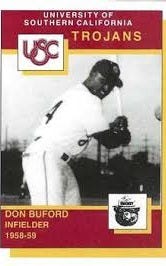
His professional career started in 1960 and he made his MLB debut in 1963 after four seasons in the minors. The Chicago White Sox front office traded Hall of Famer Nellie Fox to the Houston Astros to open second base for the 26-year-old Buford because they thought so highly of him. While Buford was not as effective as Fox, he established himself as an above-average infielder for a White Sox club that won more than 85 games in four consecutive seasons but narrowly missed the playoffs. He later transitioned to third base before alternating between the two positions.
Buford was one of the prototypical leadoff hitters of his era, owning a .362 on-base percentage and 200 career stolen bases. He stole more than 25 bags three times and has another five seasons with at least 10 stolen bases. He was also an above-average defender at second and third base who could make cameos in the outfield. I did not want to classify Buford as a super-utility player because while he played multiple positions, he never played more than two positions during a season often enough. The table below shows that the only season in which he fulfilled the “super-utility” role was 1968. Given the talent in left field and his playing almost an equal number of games at second and third base, it made the most sense to place Buford on the “Top Ten Third Basemen” list, especially considering the collective lack of talent at the position.
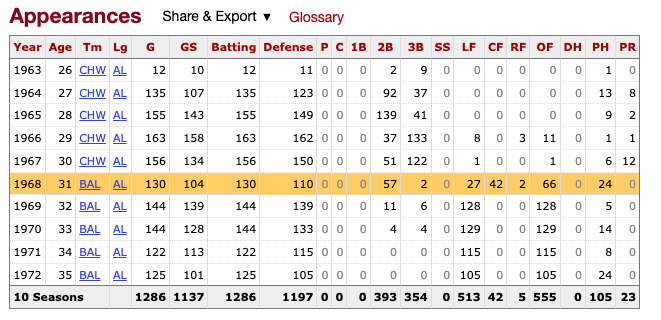
In 1968, the Chicago White Sox front office traded him to the Baltimore Orioles along with two other players in exchange for Hall of Fame shortstop Luis Aparicio and two additional players. He moved into the leadoff slot for the Orioles and thrived in the role. He shifted to left field after being traded to Baltimore because of a crowded infield that featured Davey Johnson, Mark Belanger, and Brooks Robinson.
After logging a .688 OPS in Chicago, he posted four consecutive seasons with an OPS above .800 and three straight seasons with at least 99 runs scored as an Oriole. From 1968 to 1971, Buford owned a .283/.397/.434 slash line during a period where pitchers dominated position players. He helped Baltimore make three consecutive World Series berths and logged a .256/.363/.488 slash line for his postseason career. He posted a .856 OPS in the 1970 World Series to help the O’s sweep the highly favored Cincinnati Reds in four games.
Buford hung his MLB jersey up in 1972 at the age of 35 after his hitting prowess suddenly fell off a cliff. From 1973 to 1976, he played for the Nankai Hawks in Japan as one of the most dynamic position players in NPB during the mid-1970s despite his relatively old age. He became a minor league coach in 1981 and retired from the role in the late 2000s. While he spent time in a handful of teams’ farm systems as manager, coach, and roaming instructor, he is most known for his time with the Baltimore Orioles organization.
6. Bill Madlock
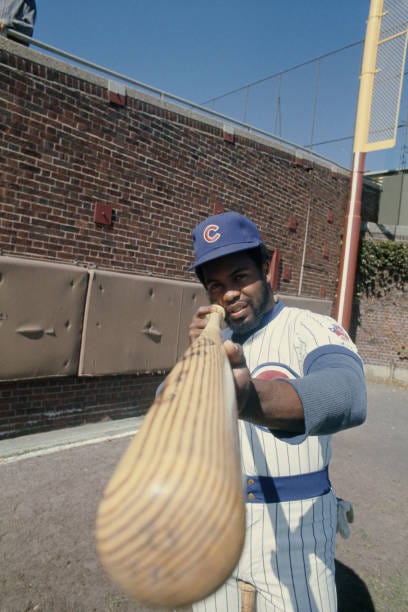
“I’d been down in southern Illinois, and I was driving home to Beason. Usually I go to Lincoln and back down the highway. This time I took a back road from Decatur through Chestnut, and I saw a ballgame going on right there in Beason. Lincoln’s Legion club was there against Decatur. It was the last inning. I saw this kid by the name of Bill Madlock swing one time, and I said, ‘Boy, he’s got that quick bat.’ I went to Lincoln’s coach, John West, and said, ‘How’d that kid do the last time up?’ West said, ‘He reached that fence out there.’”
Three-time All-Star and All-Star Game MVP Bill “Mad Dog” Madlock is one of the greatest contact-oriented hitters of The Integration Era, possessing four batting titles and logging a batting average above .310 in six individual seasons during his 15-year career. He was the first player in MLB history to collect at least two batting titles with two different franchises and is second all-time in batting titles collected by a third baseman behind Wade Boggs. He quickly developed a negative reputation because of his extremely short temper, getting into shouting matches and physical altercations with opponents and umpires numerous times. He drastically changed his behavior later in his career, becoming known as a charming peacemaker and clubhouse leader.
Madlock was born in Memphis, Tennessee but was raised in Decatur, Illinois by his grandmother along with his aunt and uncle. He was a dominant three-sport athlete in high school, receiving over 100 scholarship offers from major D1 colleges for football and basketball but only receiving 2 scholarship offers from small baseball programs in the Midwest. During the spring, Madlock was drafted directly out of Eisenhower High School in Decatur, Illinois in the 11th round of the 1969 MLB Draft by the St. Louis Cardinals but opted to attend college because he thought there would be little opportunity to play shortstop in the Cardinals farm system.
In the summer of 1969, the young infielder was spotted playing baseball by a Washington Senators scout who lived in the Decatur area and was drafted by the organization in the fifth round of the 1970 MLB Secondary Draft. He agreed to terms and made his MiLB debut in 1970. After accumulating two years of experience in the Senators farm system, he was traded to the Texas Rangers in exchange for Hall of Famer Fergie Jenkins. It was the first of four notable trades centered around Madlock that occurred during the 1970s. After a 21-game cup of coffee with Texas where he slashed .351/.412/.533 during the 1971 season, the Rangers front office traded the infielder to the Chicago Cubs in exchange for Fergie Jenkins.
During his three years with the Cubs, Madlock established himself as one of the most productive third basemen of the 1970s. He finished third in Rookie of the Year voting in 1974 and was sixth in NL MVP voting in 1976. In between the 1976 and 1977 seasons, he was traded from Chicago to the San Francisco Giants after not being able to agree on contract terms with the Cubs front office. He subsequently signed a five-year, $1.3 million dollar contract with the Giants shortly after.
Madlock quickly wore out his welcome in San Francisco with his temper and poor infield defense despite being an effective hitter. He was unhappy being moved from third base to second base due to Darrell Evans being assigned to play third base. He brought his short temper to The Bay Area as well. He frequently fought opponents, teammates, and umpires, building a large cache of enemies throughout the realms of baseball. From 1974-1978, he played in only 662 of a possible 810 games due to suspensions, missing 20-30 games during a season.
In 1979, “Mad Dog” was traded to the “We Are Family” Pittsburgh Pirates team that included Dave Parker, Willie Stargell, Omar Moreno, and others. It was the fourth time he had been traded during the decade, and he finally found a place where he fit in. During his time with the Pirates, Madlock was selected to two All-Star teams and was named the captain of the Pirates after Willie Stargell retired. In 1979, the club was looking to make a deep playoff run and Madlock helped them win the 1979 World Series by posting a .857 OPS in the NLCS and a .899 OPS in the World Series.
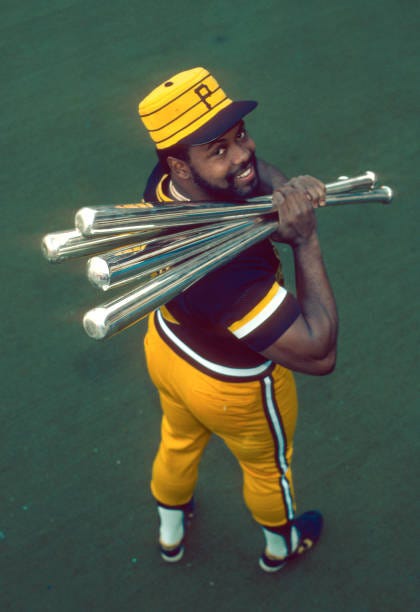
Madlock later signed a contract with Pittsburgh that kept him with the team until 1985 when he was traded to the Los Angeles Dodgers. He played for Los Angeles in 1986 and in 1987 he was traded from the Dodgers to a Detroit Tigers team that was looking for another World Series after winning in 1984. After Detroit got eliminated from the 1987 ALCS by the Minnesota Twins, Madlock hung his cleats up and retired after 15 years in MLB.
Explaining My List
I struggled with whether I wanted Hank Thompson over Bobby Bonilla or vice versa, so I decided to make it a tie for tenth place. It made a lot of sense considering the similar level of production in my opinion.
While Bonilla is more known for his infamous deferred contract payment with the New York Mets, he’s one of the most underrated third basemen of The Integration Era. He was an offensive juggernaut during The Steroid Era’s peak as a clean player and accumulated a lot of postseason playing time that included a World Series win with the 1997 Florida Marlins.
Thompson is one of the biggest what-ifs of the 1950s, having his career cut short by injuries and alcoholism. He was a player cut from a similar cloth to Don Buford, although he lacked Buford’s defensive skills and baserunning prowess.
Terry Pendleton is one of the most underrated defenders of all time in his position group. It is a major travesty that he has only one Gold Glove and is not well known for pairing with Ozzie Smith Jr. to form a historical defensive combination at third base and shortstop. While he struggled offensively to begin his career, his productivity during the 1990s was outstanding for a glove-first 3B and he is firmly established on this list. Playing during The Steroid Era has skewed Pendleton’s offensive numbers as well.
I heavily considered putting Don Buford with the super-utility players but decided against it based on the lack of overall depth in the third-base position group. He was an above-average defender at third base and on-base maestro in a decade where position players did not have much offensive success. Buford is one of the prototypical leadoff hitters of his era along with Lou Brock, Willie Davis, Maury Wills, and others.
Bill Madlock is one of the best offensive third basemen of The Integration Era while being one of the worst defenders in the third base position group. His shoddy defense and short temper held him back from a Hall of Fame career. He is a tier below Wade Boggs, George Brett, and a few others. The fact that he was traded so often during his MLB career is another reason why Madlock is often forgotten or glossed over.
Further Reading
Top Ten Black Catchers of All Time Part 1 (#10 - #6)

The first article in a series that ranks the top ten Black baseball players at each position
Top Ten Black Catchers of All Time Part 2 (#5 - #1)

The second article in a series that ranks the top ten Black baseball players at each position
Top Ten Black First Basemen of All Time Part 1

The third article in a series that ranks the top ten Black baseball players at each position
Top Ten Black First Basemen of All Time Part 2

The fourth article in a series that ranks the top ten Black baseball players at each position
Top Ten Black Second Basemen of All Time Part 1

The fifth article in a series that ranks the top ten Black baseball players at each position
Top Ten Black Second Basemen of All Time Part 2

The sixth article in a series that ranks the top ten Black baseball players at each position