The Show Notes #29: Baseball's Afro-Latino Counterculture is Purposely Ignored

Introduction
When I read the autobiographies of Afro-Latino legends Felipe Alou, Luis Tiant, and Orlando Cepeda, a common phrase with slight differences in wording turned up in the early chapters of all three books that was credited to the late Afro-Puerto Rican Hall of Famer Roberto Clemente. Clemente’s version of the phrase is vulgar and raw, but in my opinion is the most fitting:
“In America, I am a double nigger over because I am Black and Latino”
I often use the saying as a retort whenever someone replies with “I no Black, I Dominican” after I tell them that I write about Black baseball players in MiLB/MLB from all over the world, and not just African-Americans. The Afro-Latino Counterculture that has been part of the African diaspora’s 150-year-old relationship with baseball is ignored and disrespected, even when the many of the most important Latino players to wear baseball uniforms have claimed their Blackness on record. I’ve written about this subject before, but there is so much more to delve into pertaining to the perception of Black Latinos in professional baseball. The entire African diaspora’s relationship with baseball is evolving and progressing at a rapid pace, especially across Latin America.
The Red Black Green Baseball Blog is a reader-supported publication. To receive new posts and support my work, consider becoming a free or paid subscriber.
The Anglophone & Francophone Afro-Caribbean Enclaves in Hispanophone Latin America Are Producing More Talent
There is a lengthy history of Anglophone and Francophone Afro-Caribbean immigrants and their descendants picking up the sport of baseball in Hispanophone Latin America. Francophone and Anglophone Afro-Caribbean individuals have been migrating to Spanish speaking areas of Latin America since the 1880s, mostly in search of work and/or education. Cuba, Nicaragua, Panama, Honduras, and Costa Rica possess sizable Afro-Caribbean ethnic enclaves where English, Haitian Kreyol, and/or an Anglophone Afro-Caribbean patois is the lingua franca. Some notable Afro-Caribbean baseball players from Latin America who made names for themselves in the various realms of baseball before MLB’s integration include include Eduardo Green, Ray Noble, León Kellman, Pat Scantlebury, Frankie Austin, and Webbo Clarke. Afro-Caribbean players from Hispanophone Latin America have continued to stand out in MLB, with Dominican-Haitian Alfonso Soriano, Trinidadian-Panamanian Rod Carew, and Cuban-Jamaican Aroldis Chapman serving as primary examples. Other Afro-Caribbean baseball players from Latin America who have worn MLB uniforms include Humberto Robinson, David Green, Iván Murrell, Ben Oglivie, Christian Bethancourt, Rennie Stennett, Roberto Kelly, Albert Williams, Miguel Sanó, Mariano Duncan, Chico Salmon, Ronnie & Rafael Belliard, Estevan Florial, and Andres Thomas.
Ernesto Martínez Jr. is one of the more tenured active players with Afro-Caribbean heritage in MiLB at this moment. The Haitian-Cuban first baseman signed with Milwaukee as a top prospect in 2017 after defecting to France from Cuba alongside his father Ernesto Martínez Sr., a veteran catcher from the Cuban National Series who transitioned to France’s top baseball league in exchange for French citizenship. Martínez Jr. is a 6’6’’ slugger with an unique combination of 70-grade raw power, above-average athleticism, and above-average defense. Dominican-Haitian shortstop Felnin Celesten is arguably the most talented active Afro-Latino prospect of Caribbean descent in MiLB. He has an unusually high floor for an international prospect because of his above-average raw power and potential to be an above-average defender up the middle for the next decade. Afro-Panamanian Ryan Burrowes has shown potential during his brief minor league career, but it will remain to seen if he can hold his own in the upper minors. Jamaican-Nicaraguan Kenly Hunter is one of the most talented position players to emerge from Nicaragua’s amateur ranks during the 21st century. Born and raised in Holguín, Cuban National Series veteran Emmanuel Chapman is slated to be in Cuba’s bullpen for the 2026 World Baseball Classic with an effective fastball that sits in the high 90s and a nasty two-plane slider.
Extra Names You Should Know About
Branell Anderson
Yorman Licourt
Jean Walters
The Consistent Flattening of MLB’s Outspoken Afro-Latinos
Roberto Clemente
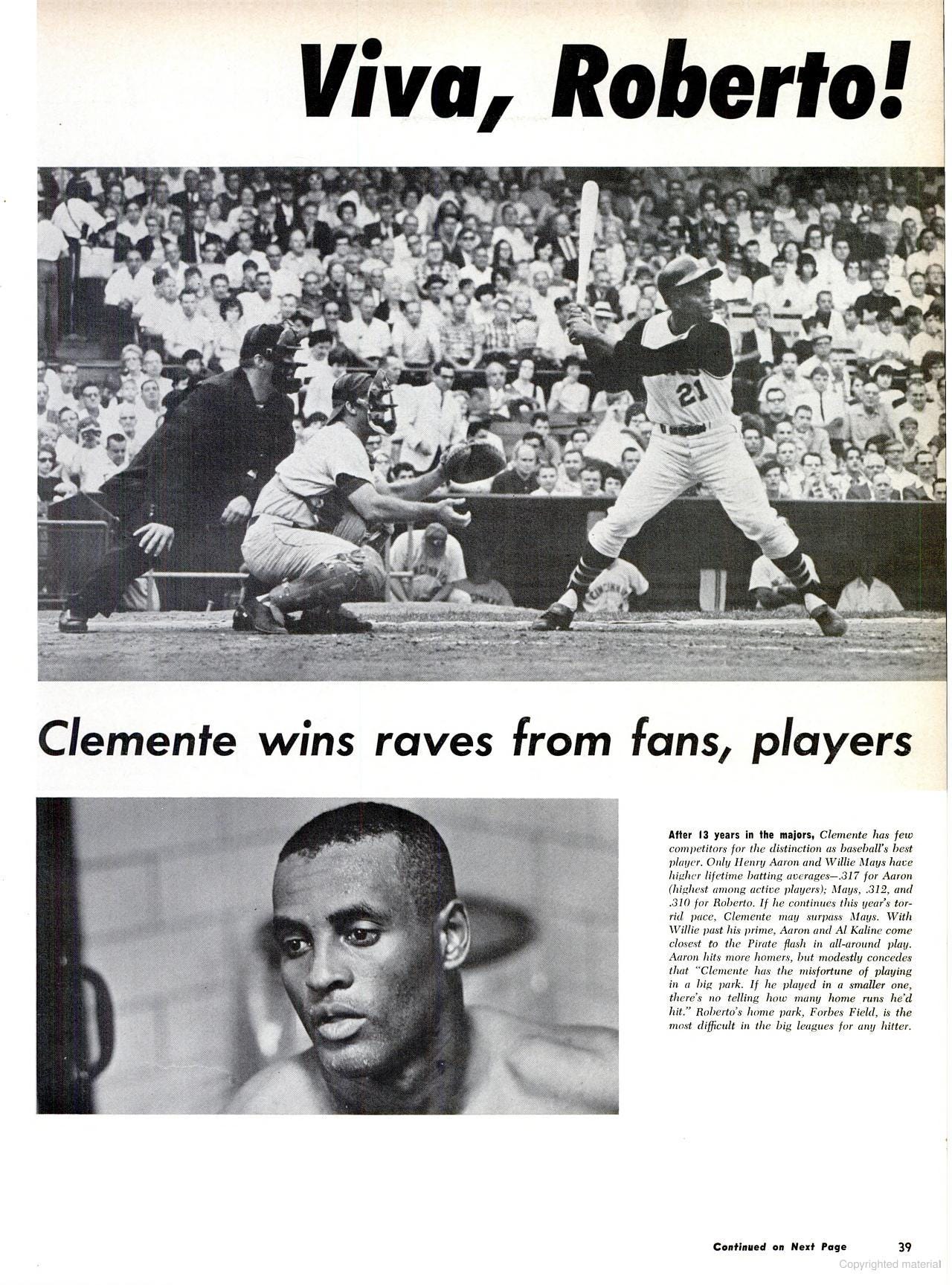
Since the beginning of the 20th century, there is arguably no singular Black athlete who has had their heritage, actions, viewpoints, and existence flattened more than Afro-Puerto Rican outfielder Roberto Clemente. The erasure of Clemente’s Blackness from mainstream narratives despite the fact that he belongs in the same category as Pelé, Jackie Robinson, Muhammad Ali, Spencer Haywood, Kareem-Abdul Jabbar, Jim Brown, George Weah, and other prominent Black athlete-activists from across the African diaspora is one of the biggest travesties in modern-day sports media. He willingly talked to African-American journalists and was featured in African-American publications such as Ebony magazine’s September 1967 issue. He forced MLB to postpone its Opening Day after his friend and confidant Dr. Martin Luther King Jr. was assassinated on April 4th, 1968. David Maraniss’s 400-page biography of Clemente is one of the most detailed sources of information on the Afro-Puerto Rican and how he carried himself on and off the field. Other Afro-Latinos in MLB who played with and against Clemente frequently talked about his actions, viewpoints, etc. on record as well.
Felipe Alou
“We, just the Latinos, talked about it, what had happened and how it looked as though there was a quota system. The conversations didn’t linger, but my feelings did. I was convinced the Giants were going to do one of two things with me—send me to the Minor Leagues permanently or trade me. I knew they wouldn’t release me, but they could bury me. Somehow, some way, I was going to pay the price for having left the ball club and flying home to the Dominican Republic. I was Black and Latino and I had played with fire, and I knew it.” - Felipe Alou
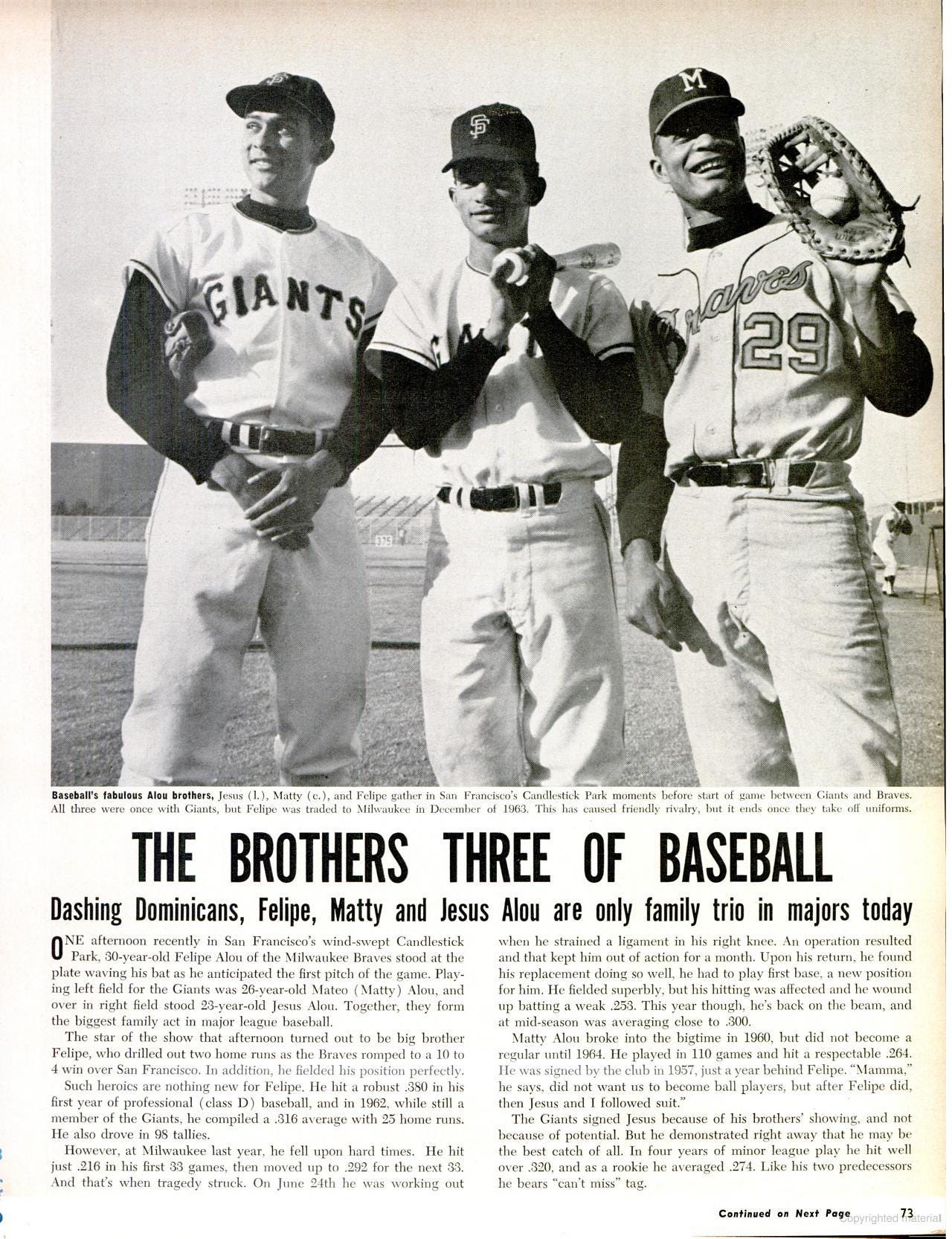
Afro-Dominican Felipe Alou’s autobiography Alou: My Baseball Journey is a great place for any interested party to start at when delving into the history of Afro-Latinos claiming their Blackness within baseball. It was very surprising to see a Dominican individual of Alou’s stature be willing to talk the subject of race on record in such detail and at length. He not only recounts his experiences as an Afro-Dominican, but often mentions other Black players in MLB who were his peers and how their actions impacted him. Similarly to Roberto Clemente, Alou frequently engaged with the African-American press during his playing and managerial career. He has been featured in Ebony magazine multiple times, including the September 1965 edition alongside his two brothers Matty and Jesús.
Luis Tiant II
The late Afro-Cuban starting pitcher Luis Tiant II should be in the Hall of Fame, but that is another conversation for a different day. His colorful MLB career almost never happened, as his father Luis Tiant I forbade him from pitching in the United States because of the de facto and de jure racism he encountered in America while pitching in the Negro Leagues. Tiant I allowed Tiant II to try and make a name for himself in MLB after two weeks of convincing from his wife and a family friend who was a scout for the Cleveland Indians. Tiant II was adamant about having his Blackness acknowledged, even going as far as calling out James “Mudcat” Grant for not including Afro-Latino starting pitchers who have won 20 games during a single MLB season in the first edition of his “Black Aces” book. His autobiography Son of Havana is a very forthcoming and worthwhile read for anyone interested in learning about the perspective of an outspoken Afro-Cuban.
More Notable & Outspoken Afro-Latinos in MLB
Rod Carew
Vic Power
Orlando Cepeda
Carlos Delgado
Francisco Lindor
The Afro-Latino Naming Tradition That Pays Homage to African-Americans
There is an unique history that involves Afro-Latinos in MLB naming their children after prominent African-American individuals. Afro-Puerto Rican Hall of Famer Orlando Cepeda named his two oldest sons Malcolm and Ali, after Malcolm X and Muhammad Ali. Robinson Cano’s name pays homage to fellow second baseman Jackie Robinson and he wore the number 24 for the majority of his career to pay homage to Robinson. Afro-Venezuelan superstar Ronald Acuña Jr. has a long history of using basketball celebrations in between the lines and has gone on record about his avid NBA fandom. He named his two oldest sons after African-American NBA players Jamal Crawford and Russell Westbrook. Afro-Colombian-Nicaraguan NPB infielder Jeter Deion Downs was named in honor of Derek Jeter and Deion Sanders. Born and raised in Panama, Iverson Allen is a prospect in the Pittsburgh Pirates system who was named after Allen Iverson.
Further Reading
The Show Notes #1: Examining Some of the Factors That Caused Black America’s Detachment With Baseball
January 16, 2023
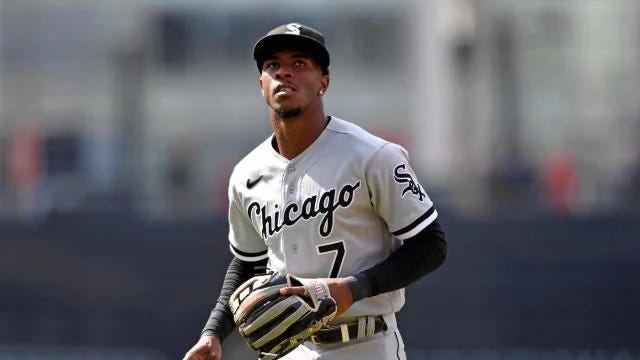
The professional athletes that have played in Minor League Baseball are already the best in the world at the game of baseball. The almost twenty thousand individuals who have worn an MLB uniform are outliers in a world of hundreds of thousands who dream of but do not reach baseball’s most competitive stage. Shortstop Tim Anderson of the Chicago White Sox is one of these individuals, and he is an outlier among the outliers who happen to be his peers because of the extremely unique path he took to becoming a professional baseball player.
The Show Notes #2: The World Baseball Classic’s Potential Impact on the African Diaspora’s Relationship With Baseball

The 2023 World Baseball Classic was an absolute win for baseball, and it was thoroughly needed. The irony of MLB fans pointing out that the WBC is less than 20 years old every time an important MLB player got hurt captures the point of why the WBC is long overdue and necessary for the sport to thrive on a global level.
The Show Notes #8: Black Baseball's Conundrums With Race, Ethnicity, & Nationality

I. Ignoring Afro-Latino Players Must Cease

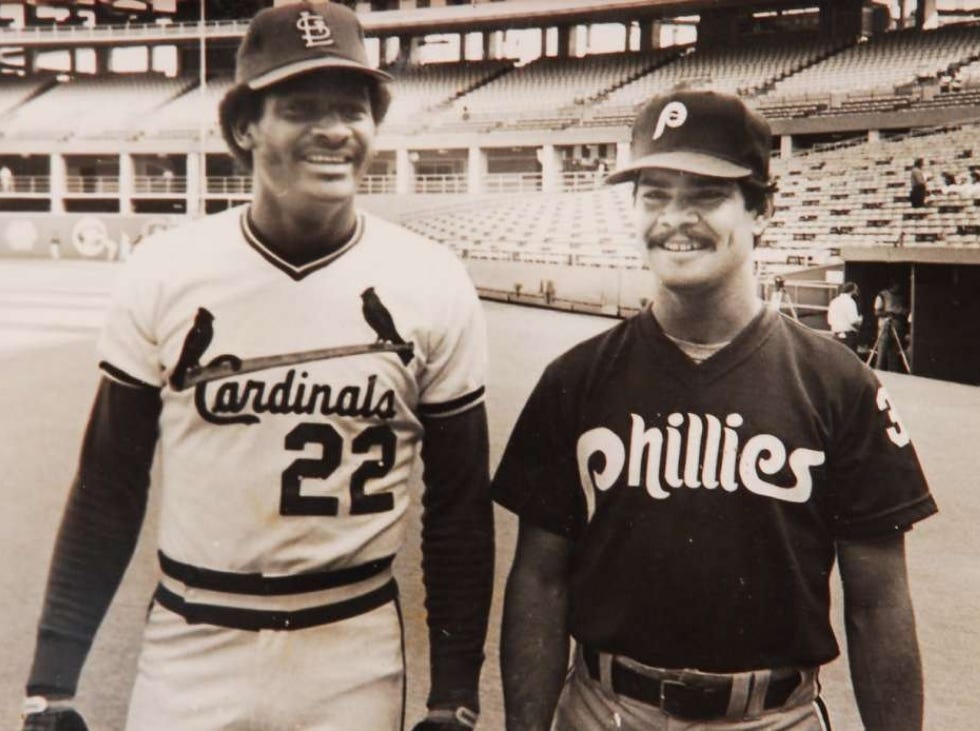
Notable Black Baseball Families Part 3: OF Edward "Eduardo" Green & OF David Green
March 23, 2023
Writer’s Note
Hi! I recently wrote a piece about the Rooney Rule in the NFL, to address to ongoing diversity problem in NFL hiring practices. If you have time, please check it out!
https://open.substack.com/pub/fgpsports/p/rooney-rule-in-2026-how-should-the?utm_campaign=post-expanded-share&utm_medium=web